Top 5 Problems with Traditional Ceiling Tiles—and Why Vinyl Is the Solution
When it comes to commercial spaces—especially kitchens, hospitals, and other high-moisture environments—the ceiling is often overlooked. Yet it plays a critical role in hygiene, safety, and overall appearance. Unfortunately, traditional ceiling tiles just aren’t built to handle the challenges of these demanding settings. They absorb moisture, trap bacteria, and quickly show signs of wear.
That’s where vinyl ceiling tiles for commercial spaces make the difference. Built for durability, hygiene, and long-term performance, they address the most common problems that plague outdated materials. Let’s break down the top five issues with traditional ceiling tiles—and see how vinyl provides the ultimate solution.
1. Mold and Mildew Growth
The Problem:
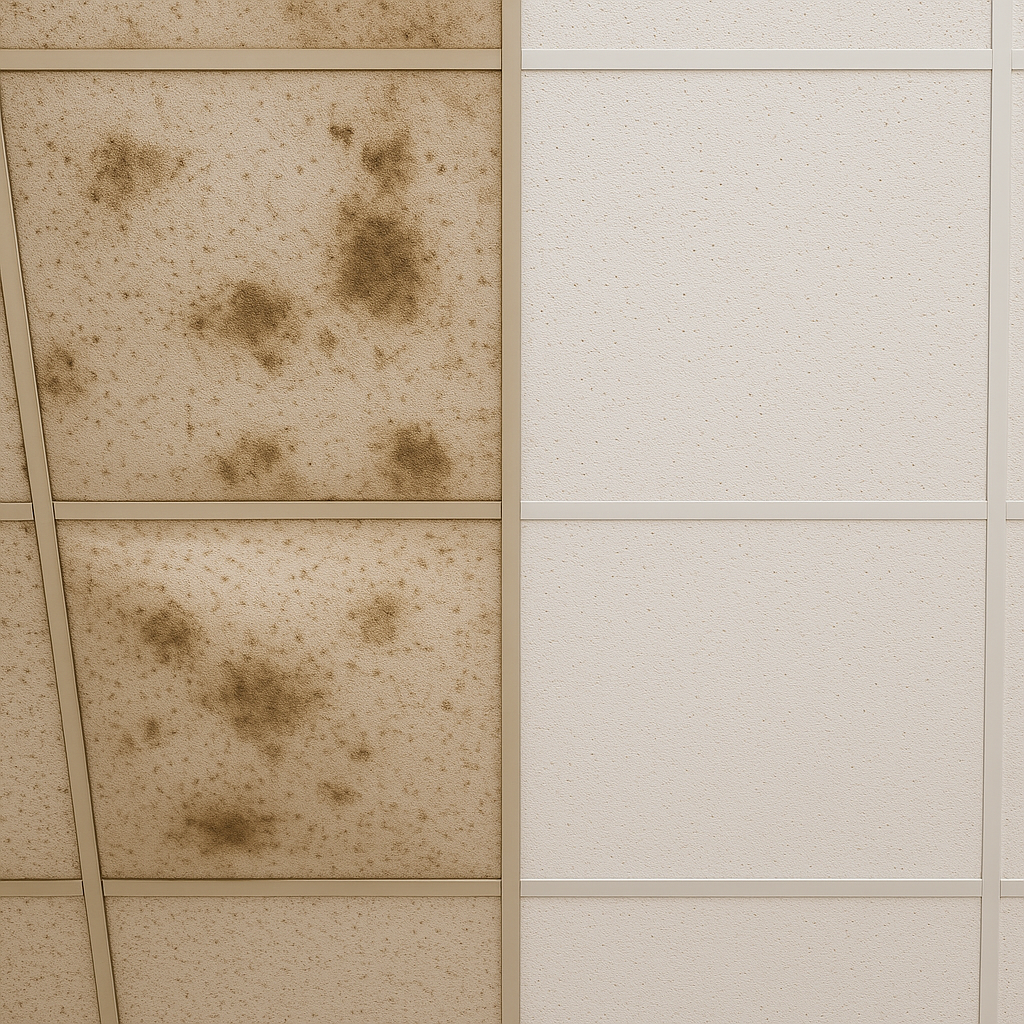
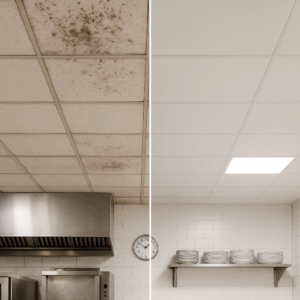
Traditional tiles made from porous materials, such as fiberboard or acoustic panels, absorb moisture and humidity. In kitchens, healthcare facilities, and bathrooms, this creates a perfect breeding ground for mold and mildew. Not only does this look unprofessional, but it can also pose serious health risks and cause failed inspections.
Vinyl’s Solution:
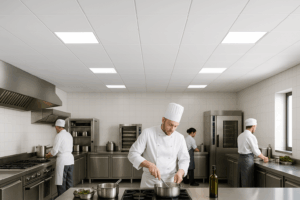
Vinyl ceiling tiles for kitchens and high-moisture environments are non-porous and moisture-resistant. Mold and mildew simply can’t take hold. This makes them a safe, hygienic choice for food service areas, medical facilities, and any space where cleanliness is non-negotiable.
2. Sagging Over Time
The Problem:
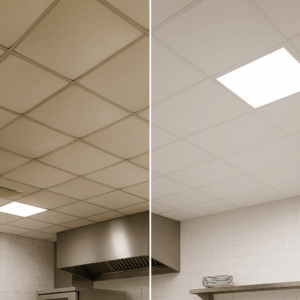
Heat, steam, and humidity are the enemies of traditional ceiling tiles. Over time, they sag, warp, or buckle, leaving ceilings uneven and unsightly. A sagging ceiling isn’t just unattractive—it can undermine customer confidence in a business.
Vinyl’s Solution:
Vinyl tiles are engineered for stability. They maintain their shape and structure even under constant exposure to heat and humidity. With vinyl ceiling tiles for commercial spaces, you’ll never have to worry about drooping ceilings again.
3. Stains and Discoloration
The Problem:
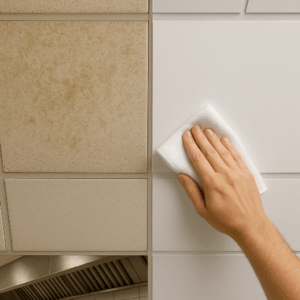
Smoke, grease, and leaks can stain conventional ceiling tiles permanently. No matter how much you scrub, they often stay dingy, creating an impression of neglect.
Vinyl’s Solution:
Vinyl tiles are stain-resistant and designed to maintain a fresh appearance. A quick wipe-down restores them to like-new condition, keeping kitchens and other commercial spaces looking bright, clean, and professional.
4. Difficult to Clean
The Problem:
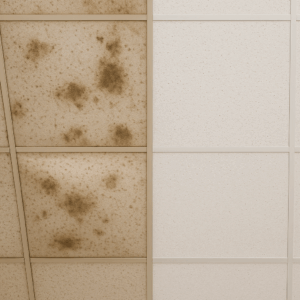
Porous ceiling materials trap dust, grease, and bacteria deep inside. Not only are they hard to clean, but they’re nearly impossible to sanitize effectively—something that’s unacceptable in kitchens or healthcare facilities.
Vinyl’s Solution:
Vinyl ceiling tiles feature a smooth, washable surface. Standard cleaning supplies are all that’s needed to keep them spotless and compliant with hygiene standards. For busy commercial kitchens, this makes cleaning faster and more efficient.
5. Short Lifespan
The Problem:
Traditional ceiling tiles deteriorate quickly under tough conditions. Frequent replacements drive up costs in materials, labor, and downtime—adding up to a significant expense for businesses.
Vinyl’s Solution:
Vinyl tiles are built for endurance. With proper care, they last for years without sagging, cracking, or needing frequent replacement. This makes them a cost-effective, long-term solution for demanding environments.
Why Switch to Vinyl Ceiling Tiles?
If you’re tired of fighting the same battles with traditional ceilings—mold, sagging, stains, cleaning hassles, and short lifespans—it’s time to make the switch. Vinyl ceiling tiles for commercial spaces combine hygiene, durability, and affordability in one solution.
They don’t just improve the look of your space; they make it safer, cleaner, and more professional. For restaurants, healthcare facilities, and any business that operates in high-moisture conditions, vinyl ceiling tiles aren’t just an upgrade—they’re a necessity.