Vinyl Rock Ceiling Tiles: Sanitary, Durable, Code-Compliant
When choosing ceiling materials for kitchens, clean rooms, food-processing facilities, and healthcare environments, the priorities are always the same: durability, sanitation, and compliance. These aren’t optional—they’re critical. One popular option across industries is what many professionals call “vinyl rock.” This term, though informal, describes ceiling panels that consistently meet the highest standards for hygiene and performance.
What Exactly Is “Vinyl Rock”?
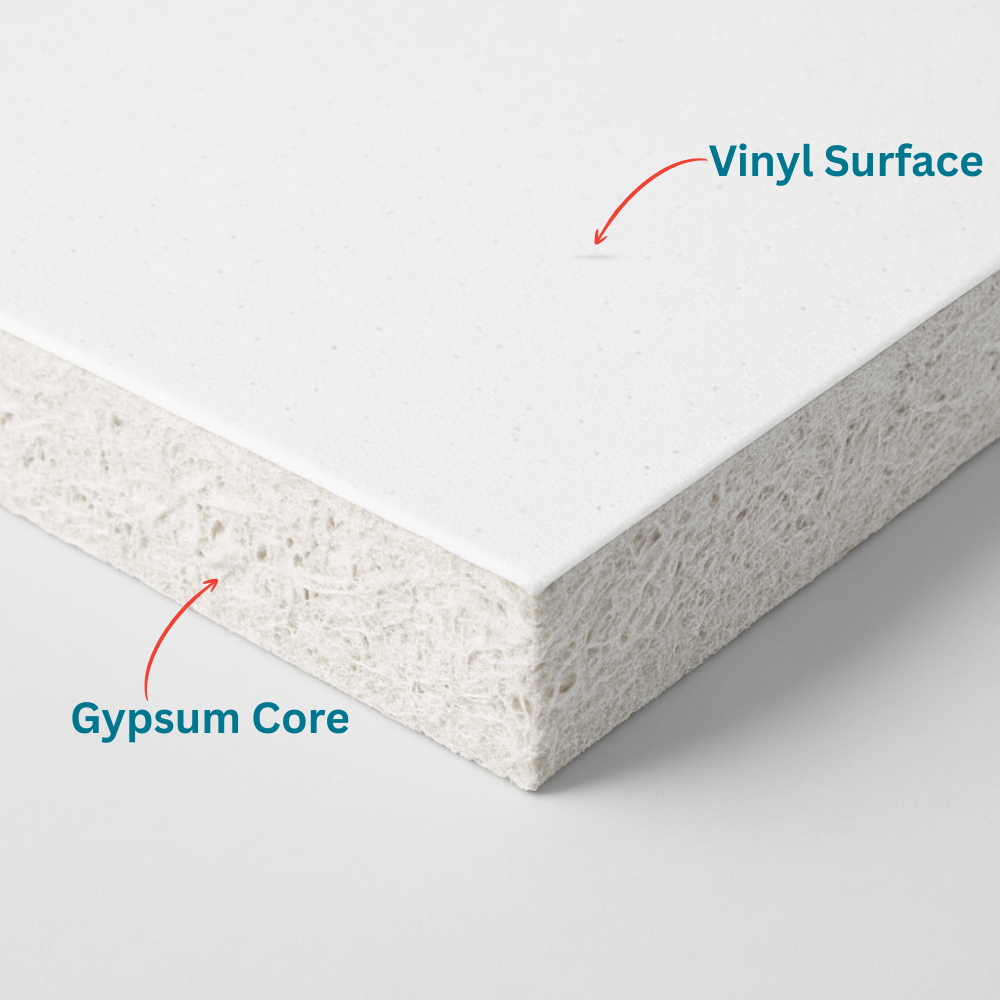
In the construction world, “vinyl rock” is trade slang, not a trademark. The phrase refers to rigid ceiling panels with a vinyl surface and a solid board core. Depending on the core material, these panels are best described as either:
Vinyl-faced gypsum ceiling panels
Vinyl-faced mineral fiber ceiling tiles
Both fall under the broader category of washable vinyl-laminated ceiling panels. Using these brand-neutral terms is important. It avoids the kind of trademark misuse that happens when all gypsum boards get generically referred to as “Sheetrock.”
What Makes Vinyl Rock Tiles So Effective?
1. Rock-Solid Core
Mineral fiber core: A blend of natural and synthetic fibers, perlite, clay, and binders that provide stiffness, fire resistance, and acoustic control.
Gypsum board core: Moisture-resistant gypsum, typically in 5/16″ or 1/2″ thickness, offering excellent stability and strong regulatory compliance.
2. Vinyl-Laminated Surface
A heat-fused PVC film forms a smooth, washable, and stain-resistant face—ideal for high-humidity environments like commercial kitchens, food-prep areas, and cleanrooms where sanitation is critical.
3. Backend Protection
The reverse side is often sealed with aluminum foil or a moisture-blocking coating. This prevents sagging and damage in humid or steam-heavy conditions.
Why Vinyl Rock Tiles Are the Smart Choice
Built Tough for Hygiene
Scratch-resistant, washable PVC surfaces make cleaning quick and effective.
Perfect for meeting USDA, FDA, BPBR, and other sanitary requirements.
Fire-Safe and Code-Ready
Non-combustible mineral or gypsum cores.
Many products meet fire safety standards such as ASTM E84 Class A.
Holds Up to Humidity
Moisture-resistant cores and sealed backs stop sagging in hot, steamy environments like kitchens or healthcare facilities.
Better Lighting & Acoustics
High light reflectance—up to 0.90 in some mineral-based panels—improves brightness and energy efficiency.
Acoustic qualities help reduce noise in busy environments.
What to Call Them (and Why It Matters)
| Trade Slang | Brand-Neutral Term |
|---|---|
| Vinyl Rock | Vinyl-faced gypsum ceiling panels |
| Vinyl-faced mineral fiber ceiling tiles | |
Final Takeaways
Choosing vinyl-faced ceiling panels is more than a design decision—it’s an investment in sanitation, safety, and compliance. These panels bring together all the features modern facilities require: washable surfaces, non-combustible cores, moisture resistance, and code-ready performance. Using the right terminology ensures your specifications stay accurate while avoiding confusion tied to trade slang.
The Kitchen Ceiling Tile Solution for Your Business
If you want all the benefits of “vinyl rock” without the confusion of slang, our Vinyl-Faced Gypsum Ceiling Panels are the clear choice.
Fire-rated as standard: ASTM E136 non-combustible core, Class A ASTM E84
Moisture- and stain-resistant: Built for performance in kitchens and food facilities
Washable PVC surface: Smooth, hygienic, and USDA/FDA compliant
Easy installation: Available in 2’×2’ and 2’×4’ lay-in options
When sanitation, safety, and compliance are non-negotiable, these ceiling panels are trusted by kitchens, clean rooms, and healthcare spaces nationwide.