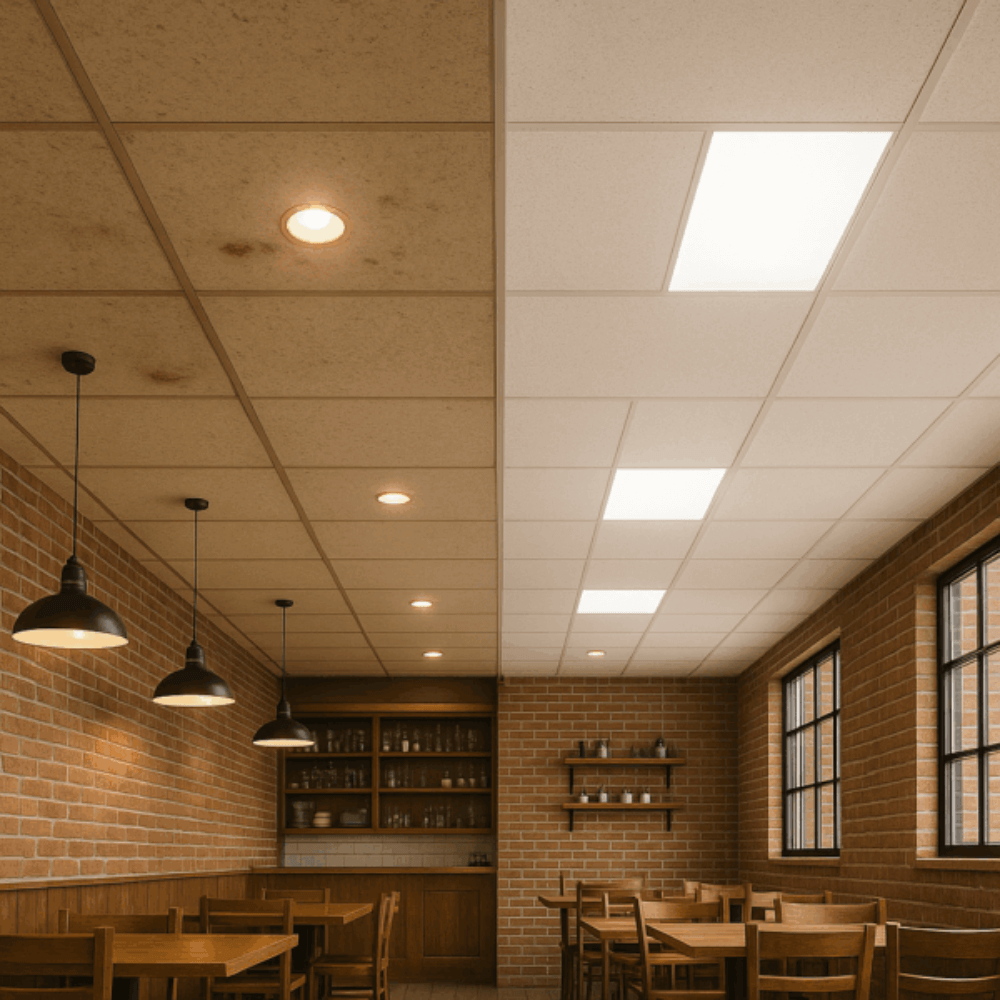
Sustainability in commercial kitchen design frequently emphasizes the use of energy-efficient equipment and the reduction of food waste, but the ceiling also has a significant impact on the space’s environmental impact. Choosing sustainable materials is crucial because ceiling tiles improve indoor air quality, reduce noise, and protect ventilation systems from grease.
A sustainable kitchen ceiling should be able to tolerate steam, oil, and regular cleaning while still providing a comfortable space for employees and customers. Designers are turning away from conventional mineral fiber boards in favor of environmentally friendly options like Gypsum Vinyl Ceiling Tiles as a result of recent technological developments. These tiles are a great choice for modern commercial kitchens because they strike a balance between sustainability, durability, and hygiene.
Practical Uses and Modern Relevance
Commercial kitchen ceilings must withstand high humidity, grease fumes, and regular cleaning. Moisture-absorbing materials have the potential to warp, harbor mold, or release particles into areas used for food preparation.
In addition to addressing these issues, eco-friendly ceiling tiles support sustainability objectives. In order to meet green building standards and enhance indoor air quality, low-VOC materials are being specified more and more.
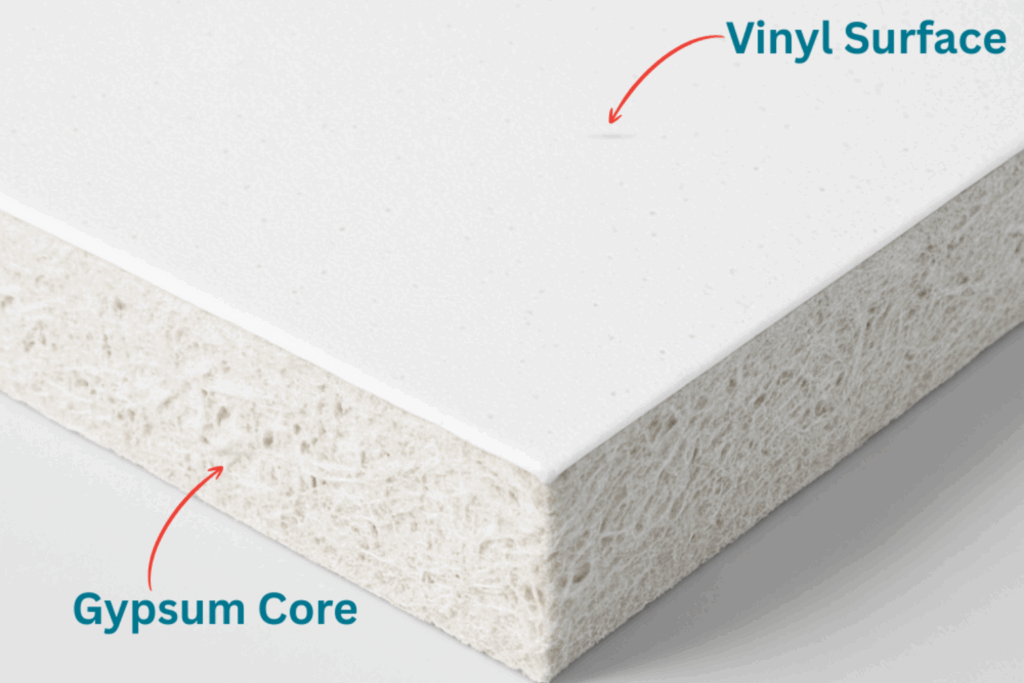
For environments with high demands, Gypsum Vinyl Kitchen Ceiling Tiles are made. Their laminated vinyl surface is smooth, nonporous, and easily cleaned, while their gypsum core offers strength and fire resistance. This makes them perfect for areas where food is prepared, like kitchens and cafeterias, where durability and hygienic conditions are crucial.
Eco-Friendly Ceiling Tile Options
1. Recycled Mineral Fibre Tiles
Due to their fire resistance and ability to absorb sound, mineral fiber tiles are frequently used. Many are recyclable through take-back programs and have a high percentage of recycled material. They may, however, occasionally contain trace amounts of chemicals that have an impact on the quality of the air. Modern low-emission products preserve acoustic performance while enhancing sustainability.
2. Metal Ceiling Tiles
Metal tiles are recyclable, non-flammable, and incredibly durable. They provide hygienic performance, long lifecycles, and resistance to moisture. In busy kitchens, acoustically backed perforated metal tiles can also enhance sound quality. These work best on projects that prioritize durability and design adaptability.
3. Bamboo & Bio-Based Tiles
Cork and bamboo are natural, renewable materials. Cork can be harvested without damaging the tree, but bamboo grows quickly and uses fewer resources. By repurposing materials, reclaimed wood tiles also promote circular design. Although these materials are eye-catching, they might need protective coatings to function properly in kitchens with high humidity levels.
4. Low-VOC Tiles
In kitchens, indoor air quality is a big concern. Certain conventional ceiling panels release volatile organic compounds (VOCs) that can aggravate employees and compromise the safety of food. Vinyl-laminated tiles, mineral fiber, and low-VOC gypsum all help reduce these hazards. Materials that meet stringent standards are guaranteed by certifications like HPD or GREENGUARD Gold.
5. Kitchen Vinyl Ceiling Tiles – The Featured Choice
Gypsum is a naturally occurring mineral that is non-toxic, plentiful, and recyclable. The tile is more resilient and easier to clean when combined with a vinyl face. In support of circular design principles, a large number of Gypsum Vinyl Kitchen Ceiling Tiles are produced using recycled gypsum.
These tiles’ vinyl surface protects them from moisture, oil, and stains. The laminated finish shields the gypsum core from normal kitchen moisture, even though the core itself is not waterproof. Because of this combination, Gypsum Vinyl Kitchen Ceiling Tiles offer a solid balance between sustainability and performance.
Due to the natural fire resistance of gypsum, Gypsum Vinyl Kitchen Ceiling Tiles have exceptional fire ratings, which are essential in commercial kitchens. Additionally, they have good acoustic performance, which lowers noise levels in busy kitchens.
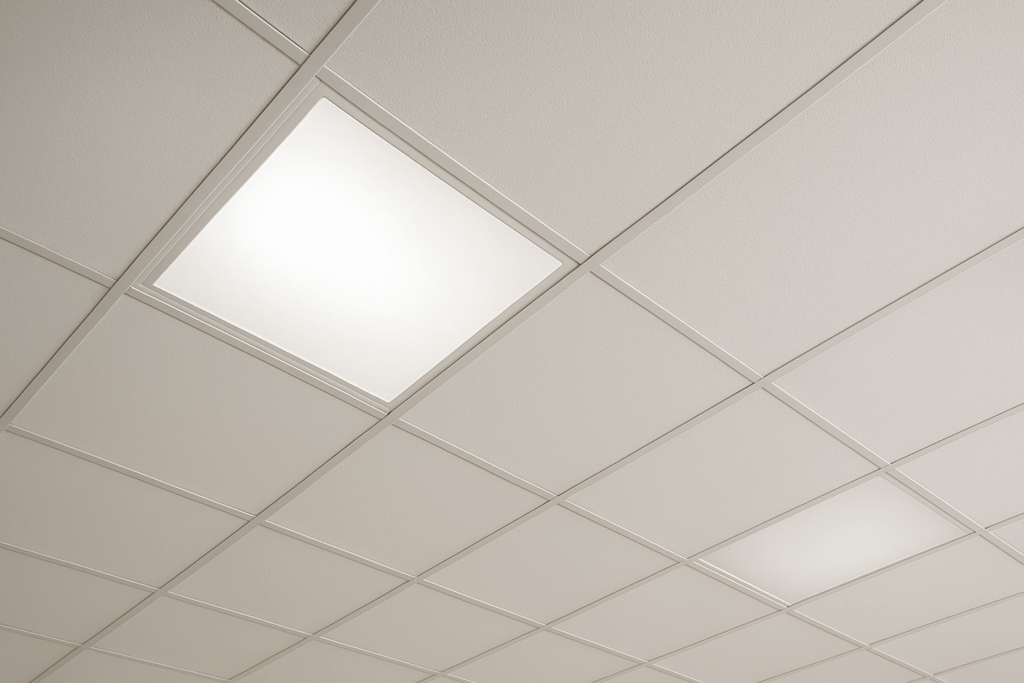
Gypsum Vinyl Kitchen Ceiling Tiles come in sleek, contemporary finishes that look good in both decorative and professional kitchen environments. They are simple to install, work with standard grid systems, and give off a polished appearance that goes well with lighting and stainless steel appliances.
Gypsum Vinyl Kitchen Ceiling Tiles are a strong environmentally friendly option due to their fire resistance, recycled content, and low-VOC certifications, even though they are not as completely waterproof as pure PVC. Because fewer replacements translate into lower lifecycle costs and less construction waste, kitchens can also benefit from their durability.
FAQs and Interesting Facts
- Are gypsum vinyl ceiling tiles eco-friendly?
Yes. Many GV Tiles are made with recycled gypsum and are recyclable at end of life. They also contribute to LEED credits for low emissions and sustainable materials. - Do they perform well in commercial kitchens?
Yes, especially when humidity levels are controlled. The vinyl surface resists stains and is easy to clean, while the gypsum core provides fire and acoustic benefits. - How do GV Tiles compare to PVC tiles?
GV Tiles: Fire resistant, good acoustics, sustainable gypsum core, but less moisture-resistant.
PVC Tiles: Fully waterproof and lightweight, but less eco-friendly due to plastic production.
4. What certifications should I look for?
Look for GREENGUARD Gold, HPD, and LEED contributions to ensure the tiles meet environmental and safety standards.
Interesting fact: Gypsum can be endlessly recycled without losing quality, making it one of the most sustainable building materials.
Conclusion
Beyond just the lighting and appliances, the ceiling is a crucial component of sustainable design in commercial kitchens. Low-VOC gypsum, bamboo, metal, and recycled mineral fiber are some options that help lessen the impact on the environment.
Gypsum Vinyl Ceiling Tiles offer a remarkable combination of durability, ease of cleaning, fire resistance, and hygiene. Their professional performance and environmentally friendly profile make them an exceptional option for sustainable commercial kitchens, even though they are not completely waterproof.
Designers and chefs can create safe, effective, and environmentally conscious kitchens by using Gypsum Vinyl Ceiling Tiles and other eco-friendly materials, proving that even the ceiling can contribute to the green revolution.