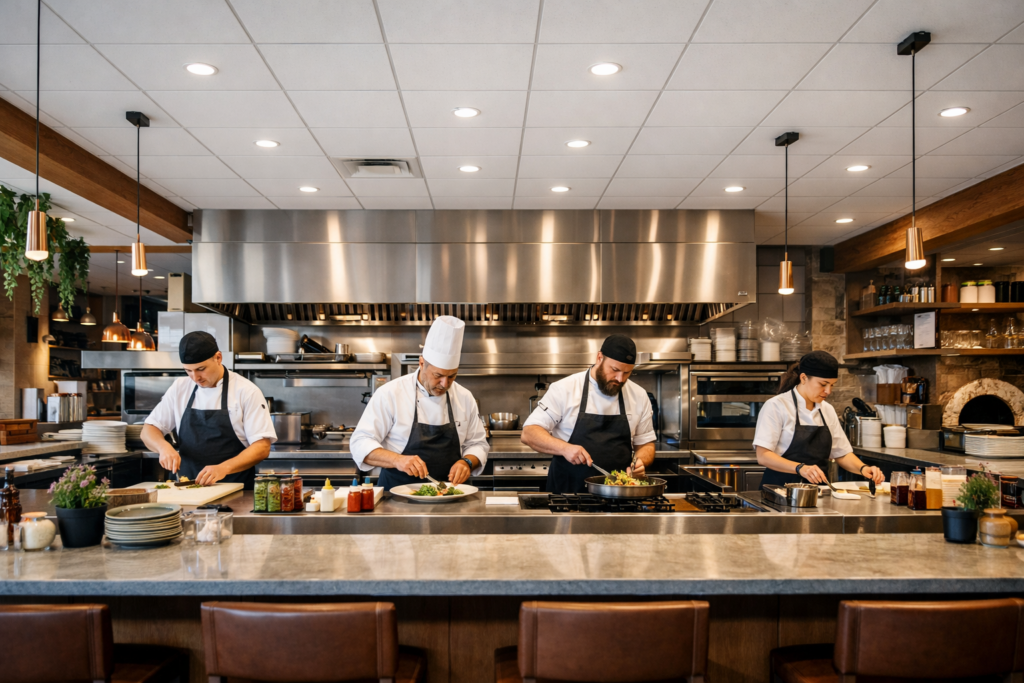
Open-concept kitchens in restaurants are a key part of modern hospitality design. Operators are embracing transparency, inviting guests to see the craftsmanship, freshness, and process firsthand, from fast-casual brands to high-end restaurants. When walls come down, though, every design element, even those that were only thought to be functional, becomes part of the guest experience.
The ceiling is one of the most visible parts of an open kitchen, but it’s also one of the most overlooked. What used to be a back-of-house surface is now right in front of guests’ eyes. Even when the food is great, grease stains, old acoustic panels, and bad lighting reflection can make people less confident.
This change has made the ceiling a branding and performance element. Now, a stylish commercial kitchen ceiling has to show that it is clean, professional, and well-designed while also meeting strict operational needs. Vinyl ceiling tiles are a modern solution that meets both aesthetic and functional needs. They are durable, easy to clean, and visually consistent, making them perfect for open-concept restaurant kitchens. In this case, ceiling design is no longer just background; it’s an important part of how people see a restaurant.
Why Open Kitchens Demand Better Ceiling Design
Guests see restaurants in a whole new way when they have open kitchens. Being open and honest builds trust, but it also makes every choice more open to criticism, especially when it comes to overhead surfaces.
People’s ideas about cleanliness are very important when they decide where to eat. Studies in food service settings indicate that visible wear, staining, or hard-to-clean surfaces adversely impact perceived food safety and professionalism.
Another thing that people often forget about is how well the lights work. The materials used for the ceiling affect how light bounces around the cooking and dining areas. If the light doesn’t reflect well, it can make people tired, make the light uneven, and make the space feel uninviting, especially in open kitchens where guests can see food being made in real time.
In open kitchens, where ceilings affect trust, comfort, and brand perception all at once, these factors make intentional restaurant ceiling design necessary.
Why Better Ceiling Design Is Necessary for Open Kitchens
The basic idea behind open-concept restaurant kitchens is that they should represent your brand if customers can see it.
Ceilings have a direct impact on how clients view professionalism and cleanliness. Visual cues have a big influence on trust in foodservice settings. One of the main elements influencing return business, according to the National Restaurant Association, is cleanliness. Ceilings are included in the visual audit of open kitchens.
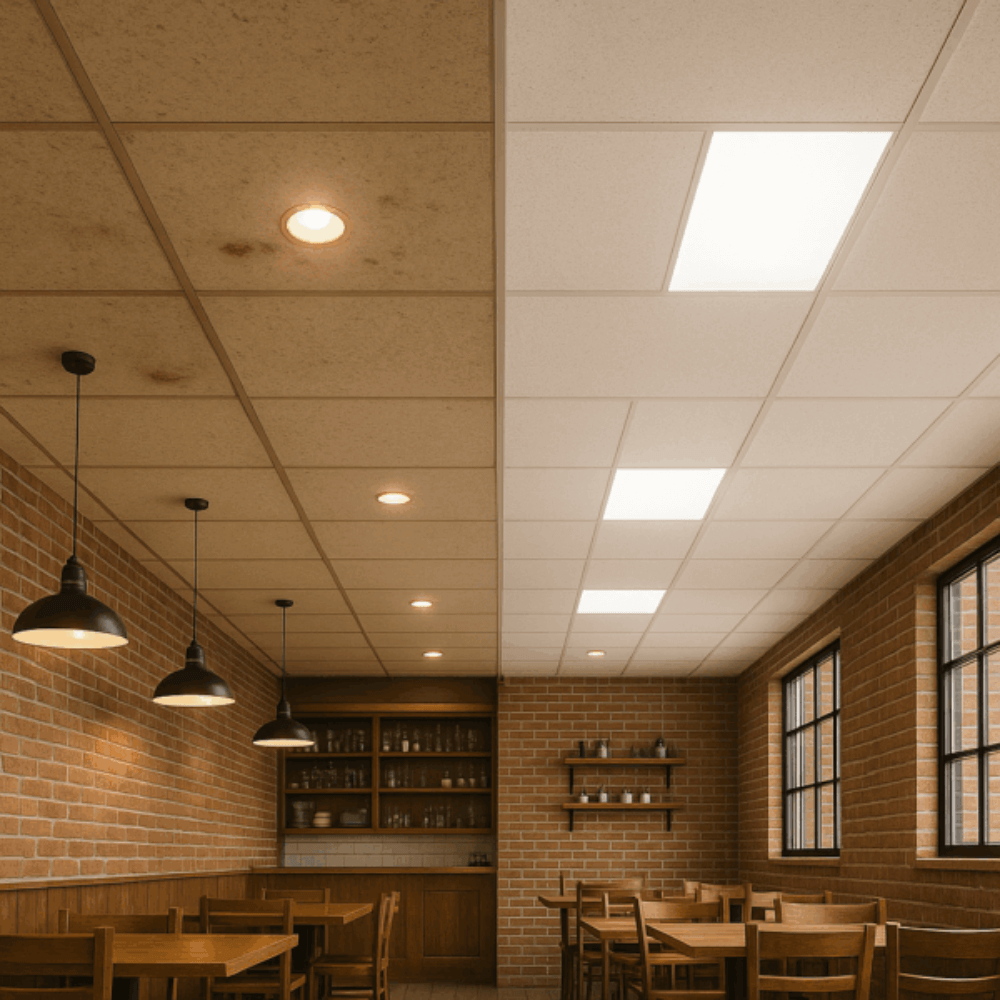
Perception of Cleanliness: Even the most exquisitely plated dish can be compromised by water stains, drooping panels, or grease discoloration. Kitchen ceiling materials that are hygienic must be able to withstand moisture and avoid obvious deterioration. Even in high-humidity cooking areas, vinyl ceiling tiles help maintain a clean, hygienic appearance because they are made to be washable and resistant to moisture.
High-Energy Space Acoustics: Sound is amplified in open kitchens. Conversation, ventilation systems, and clattering pans combine to form a single acoustic layer. This can be made worse by poorly designed ceilings, which can produce harsh reverberation. Acoustic planning is becoming more and more important to hospitality design professionals when designing restaurant interiors. In open layouts, controlling sound is crucial for guest comfort, according to Hospitality Design Magazine. Materials for ceilings are essential for absorbing or dispersing noise.
Reflection of Lighting: Most operators are unaware of how much ceilings affect light distribution. Reflective surfaces improve lighting, lessen shadowing in preparation areas, and give visitors a clearer field of vision.
Trust in Brands: Intentionality is necessary for transparency. Operational accuracy is indicated by a well-thought-out restaurant ceiling design. Neglect is indicated by an old ceiling.
Ceiling performance in open kitchens is now a front-of-house branding issue rather than a back-of-house one.
The Role of Ceiling Design in Restaurant Branding
In the hospitality industry, branding is environmental. It is constructed using texture, light, materials, and spatial clarity.
The atmosphere is shaped by the ceiling. Industrial minimalism is communicated by a matte black ceiling. A ceiling that is reflective and bright white conveys cleanliness and accuracy. Textured finishes can support rustic ideas or soften contemporary interiors. Interiors of innovative restaurants use ceilings to tell a story. Immersion spaces that incorporate ceilings into the overall architectural story enhance brand differentiation, claims Interior Design Magazine. This integration is even more important in kitchens of open-concept restaurants.
Identity of the Brand
Visual continuity between the kitchen and dining area is supported by a stylish, well-coordinated ceiling in a commercial kitchen. These days, vinyl ceiling tiles come in finishes and patterns that go well with modern, minimalist, and industrial styles.
Experience of the Guest
Unconsciously, visitors look at vertical planes. Confidence in food preparation standards is strengthened by a tidy, well-organized ceiling.
Visibility on Social Media
Photographs of open kitchens are common. Almost all of the photos have ceiling texture and overhead lighting. A unified ceiling design supports contemporary restaurant branding on digital platforms by improving the space’s visual shareability.
The ceiling enters the story when the kitchen is visible.
Why Are Vinyl Ceiling Tiles Perfect for Open Kitchens?
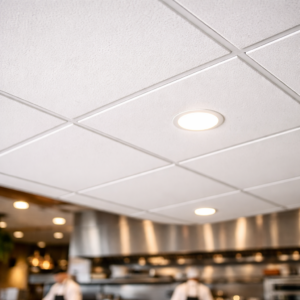
Versatility in Style
Vinyl tiles for open kitchen designs have changed dramatically in recent years. Designers are able to specify:
- Monolithic, smooth panels for minimalist kitchens
- Finishes with subtle textures to add depth
- Grid systems with clean lines that complement modern layouts
- High-end fast-casual interiors, Scandinavian-inspired ideas, and industrial stainless-steel settings can all be supported by vinyl ceiling tiles. They are now flexible design components of commercial ceiling solutions rather than just functional components.
Hygiene & Maintenance
Open kitchens require hygienic ceiling materials for kitchens that withstand:
- Steam
- Grease exposure
- Frequent cleaning
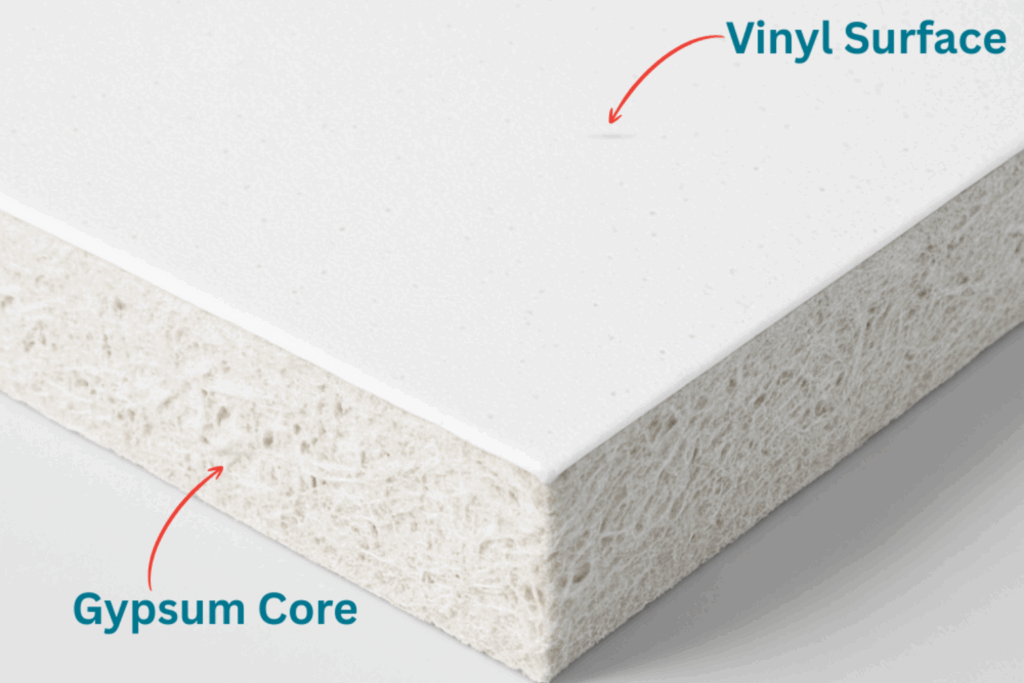
Vinyl ceiling tiles are moisture-resistant and non-porous, helping prevent mold growth and staining. Unlike traditional mineral fiber tiles, they do not absorb grease or sag in humid conditions.
Their cleanable surfaces allow maintenance teams to wipe down panels without full replacement—reducing downtime and preserving aesthetics.
For restaurant operators, this translates to consistent visual standards and fewer disruptions.
Durability & Compliance
Durable ceiling tiles for commercial kitchens must perform under constant heat and airflow changes. Vinyl panels are designed for commercial-grade environments, offering:
- Impact resistance
- Long-term dimensional stability
- Compatibility with commercial grid systems
Over time, reduced replacement frequency contributes to cost efficiency—an often-overlooked operational advantage.
Acoustic & Lighting Benefits
Many vinyl ceiling tiles are engineered with acoustic backing or perforation options, supporting sound control in open-concept restaurant kitchens.
Additionally, bright, reflective finishes enhance light distribution, making prep areas appear cleaner and more inviting to guests.
The result is a ceiling that supports both operational clarity and guest comfort—precisely what a stylish commercial kitchen ceiling should achieve.
Why Restaurants with Open Kitchens Are Choosing Vinyl Ceiling Tiles
Restaurant owners evaluating commercial ceiling solutions increasingly prioritize business outcomes.
Here’s why vinyl ceiling tiles are gaining traction:
- Lower Downtime: Quick installation within existing grid systems minimizes operational disruption. Panels can be replaced individually without full ceiling removal.
- Maintenance Efficiency: Washable surfaces reduce replacement cycles. Fewer stains mean fewer service calls.
- Long-Term ROI: Durable ceiling tiles for commercial kitchens reduce recurring material costs associated with sagging or stained acoustic panels.
- Brand Alignment: Open kitchen design vinyl tiles support a cohesive visual identity. They allow operators to maintain high standards across both kitchen and dining zones.
When ceilings are visible to guests, durability and design directly influence revenue-driving perception.
Common Mistakes Restaurants Make with Open Kitchen Ceilings
Even sophisticated operators sometimes overlook ceiling strategy.
- Ignoring Ceiling Visibility: Assuming guests won’t notice overhead surfaces is a costly mistake in open-concept restaurant kitchens.
- Choosing Residential Materials: Residential drywall or decorative panels rarely withstand commercial kitchen humidity and cleaning protocols.
- Prioritizing Cost Over Durability: Low-cost mineral fiber tiles often lead to frequent replacement, undermining long-term savings.
- Overlooking Acoustics: Failure to manage sound can negatively impact dining comfort.
Vinyl ceiling tiles address these issues by combining durability, washability, and aesthetic flexibility within a commercial-grade framework.
The Future of Open Kitchen Design
Transparency in hospitality is here to stay. Guests expect to see food preparation and evaluate operational standards firsthand. According to Hospitality Design Magazine, future restaurant interiors emphasize clean aesthetics, durable materials, and visible craftsmanship. Sustainability and long lifecycle materials are also becoming central considerations in hospitality architecture.
Ceilings must align with these priorities.
The future of restaurant ceiling design includes:
- Minimalist, clean-lined surfaces
- Moisture-resistant, hygienic materials
- Integrated acoustic strategies
- Design-forward restaurant interiors that prioritize cohesion
Open kitchen design vinyl tiles align naturally with these trends. They offer longevity, performance, and visual clarity—key attributes in modern restaurant branding.
Design Takeaway
Open kitchens elevate the ceiling from background infrastructure to brand statement.
A truly stylish commercial kitchen ceiling must:
- Reinforce hygiene
- Support acoustics
- Enhance lighting
- Align with brand identity
- Withstand commercial kitchen conditions
Traditional ceiling systems struggle to meet all these demands simultaneously. Vinyl ceiling tiles bridge that gap—offering a balanced solution where performance meets design intent.
For restaurant owners, architects, and hospitality brand managers, the takeaway is clear: ceiling design in open-concept restaurant kitchens is not a finishing detail. It is a strategic design decision.
When guests can see everything, every surface matters—especially the one above them.