Running a commercial kitchen is about more than just creating great food—it’s about protecting your staff, customers, and business by maintaining strict health and safety standards. From food storage to sanitation practices, every detail matters. One feature that often gets overlooked, however, is the ceiling. Outdated or unsuitable ceiling materials can create risks that compromise compliance with health codes and safety regulations.
That’s why more businesses are turning to vinyl ceiling tiles as the solution. Specifically engineered for demanding environments, they meet the requirements for hygiene, fire resistance, and overall durability—making them the ultimate choice for commercial kitchens.
Why the Ceiling Matters in Compliance
Commercial kitchens are held to some of the highest regulatory standards in the building industry. Inspectors don’t just check the floors, equipment, and prep areas—they also pay close attention to ceilings. Poor-quality ceiling tiles can absorb moisture, trap grease, harbor bacteria, or even fail to meet fire safety codes. Any of these issues could result in costly violations or shutdowns.
By choosing the right ceiling materials from the start, restaurant owners and facility managers can avoid unnecessary risks and stay in full compliance with local, state, and federal standards.
Fire-Resistant Ceiling Tiles: A Safety Essential
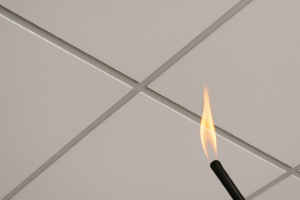
In a busy kitchen, where open flames, high heat, and constant cooking take place, fire safety isn’t optional. Materials that aren’t tested for fire resistance can quickly become liabilities.
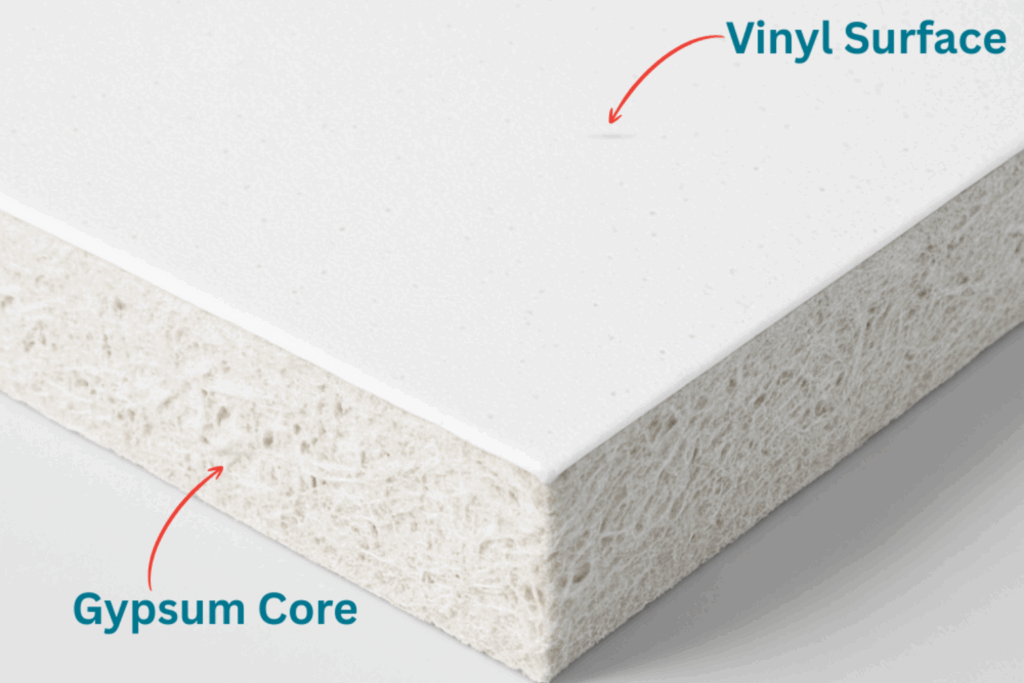
Vinyl ceiling tiles with fire-resistant cores—such as gypsum or mineral fiber—are designed to meet strict safety standards, including ASTM E84 Class A ratings. This ensures they won’t contribute to the spread of flames in the event of an emergency. By installing fire resistant ceiling tiles, businesses not only protect their employees and property but also make it easier to pass building and fire inspections.
Hygienic Kitchen Tiles That Stand Up to Daily Demands
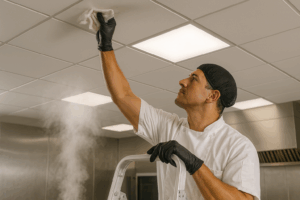
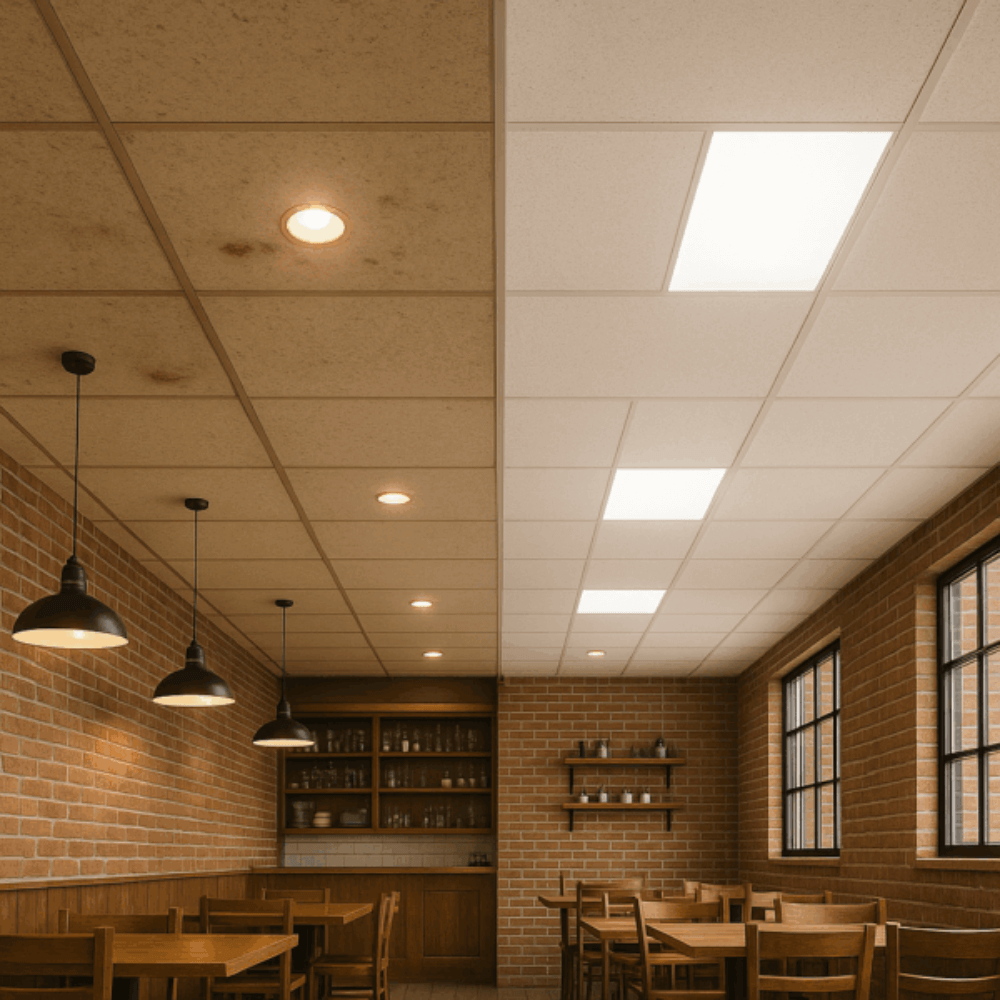
Cleanliness is the backbone of every food service operation. Unfortunately, traditional ceiling tiles made from porous materials tend to trap dust, grease, and bacteria. They discolor quickly and are nearly impossible to clean properly.
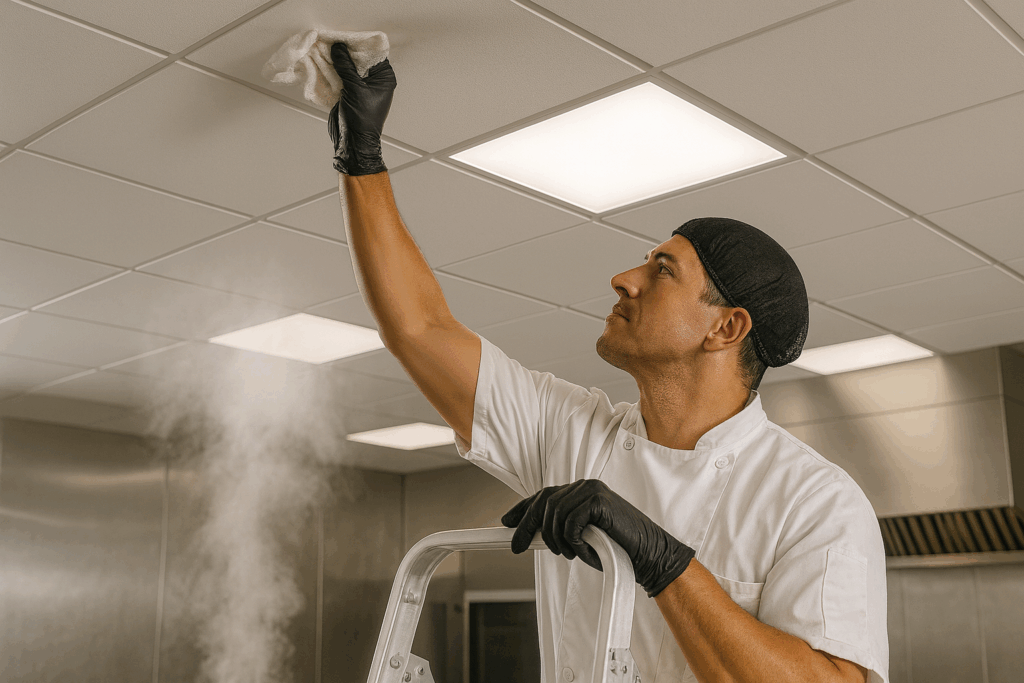
Vinyl ceiling tiles, by contrast, are hygienic kitchen tiles. Their smooth, washable PVC surface resists stains and moisture, allowing staff to quickly wipe them down during routine cleaning. This makes it easier for kitchens to meet strict USDA and FDA sanitation requirements while maintaining a fresh, professional appearance.
Commercial Ceiling Compliance Made Simple
Ceiling compliance involves more than just hygiene and fire resistance—it also means performance in challenging environments. Commercial kitchens generate constant steam and high humidity, which can cause traditional tiles to sag or deteriorate.
Vinyl ceiling tiles are engineered to resist these issues. With sealed backs and moisture-resistant cores, they maintain their shape and integrity even in the hottest, busiest kitchens. Their durability reduces the need for frequent replacements, lowering long-term costs while keeping facilities inspection-ready.
In short, commercial ceiling compliance becomes easier when vinyl ceiling tiles are part of the design.
Final Takeaways
Health and safety come first in every commercial kitchen. From preventing fire hazards to maintaining spotless sanitation, every surface needs to perform under pressure—and the ceiling is no exception.
By choosing fire resistant ceiling tiles that double as hygienic kitchen tiles, businesses can stay compliant, protect staff and customers, and create a professional environment that reflects their standards. When it comes to commercial ceiling compliance, vinyl ceiling tiles deliver a smart, cost-effective solution that stands up to the toughest demands.